
Las Flores is one of the more reliable point breaks on El Salvador’s east coast, and while it’s growing in popularity, it still feels noticeably less crowded than the main surf hubs in the country. We stayed there for surf, exploring the coastline and seeing how the spot holds up when conditions, crowds and timing all come into play.
Most surfers heading to El Salvador still focus on the better-known breaks around El Tunco or Punta Roca, but spending time in Las Flores quickly changes that perspective. Las Flores feels different; it’s not untouched or regarded as the ‘wild east coast, but being a few extra hours from San Salvador means it’s still far from the level of pressure you find at more established surf hubs.
With the brand new highway pushing further down the coast toward breaks like Punta Mango, it’s clearly an area in transition. That said, when we were there, it was still very possible to find quieter sessions at Las Flores, especially compared to more heavily trafficked surf destinations in the region.
After a few days in a simple, rustic cabin on the hills above Punta Mango, we were excited to arrive at Hotel Lakhamani, which ended up being a solid base for the trip in Las Flores. The owner, Vladimir, was welcoming and genuinely helpful throughout our stay, offering local knowledge and making everything feel straightforward.
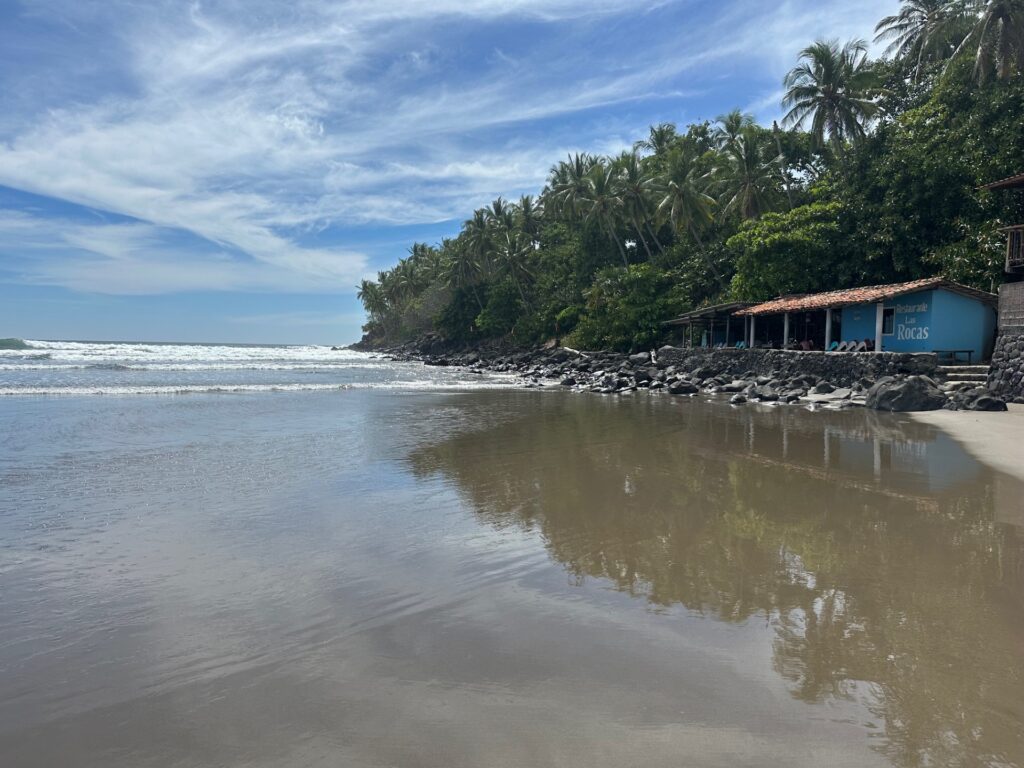
Breakfast was included, and there was an on-site restaurant and bar, which made it easy after long sessions. The location also worked perfectly, within walking distance of both the beach and the point, meaning no transport was needed day to day, just a few minutes’ walk to the beach and point.
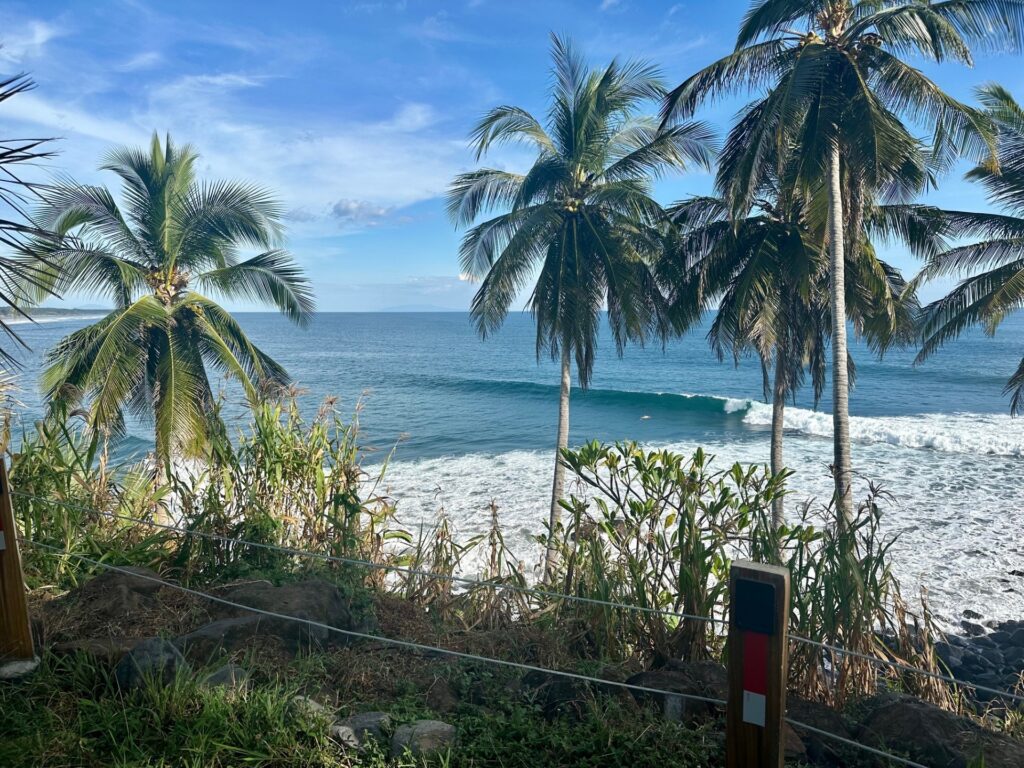
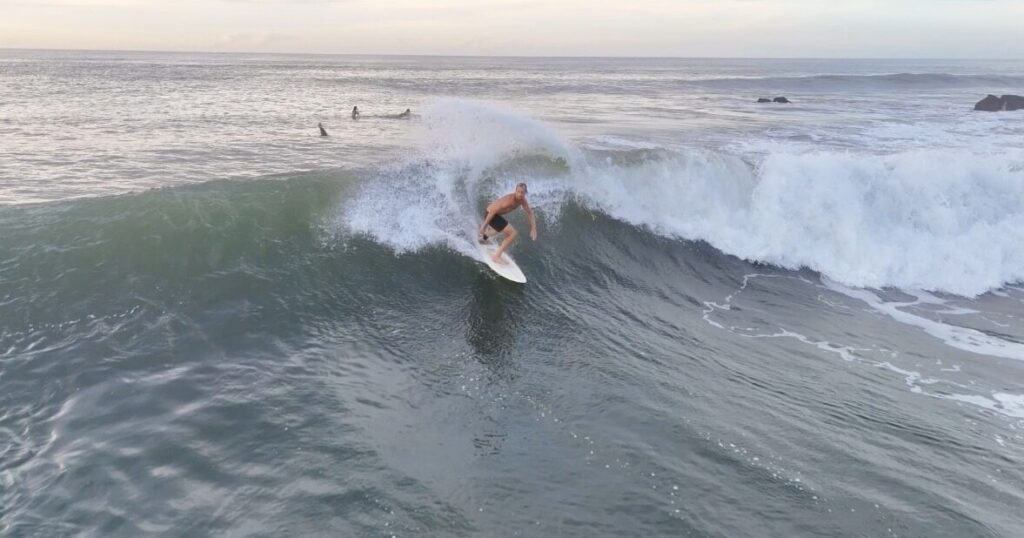
Las Flores is best known for its long right-hand point break that wraps cleanly around the headland when swell lines up. Between March and October, a consistent southern-hemisphere swell brings the wave to life, offering long, running walls with sections for turns, speed, and the occasional barrel.
On good mornings, the wind sits offshore, the surface goes glassy, and the wave just keeps running. It’s the kind of place where a single ride can stretch long enough that you lose track of where you are on the wave.
The lineup is generally a mix of travelling surfers, locals and longer-term visitors. It can get busy, but it rarely feels chaotic in the way more famous point breaks often do.
One of the things that makes this stretch of coast interesting is that Las Flores isn’t the only option. When the main point is busy or simply not working at its best, there are a few nearby alternatives worth exploring.
Just to the north, there’s a shorter, punchier right-hand wave that can help spread out the crowd when Las Flores is full. It doesn’t have the same length or rhythm as the main point, but on the right swell, it offers a fun, faster-paced option.
Further along the coast, heading towards the infamous Punta Mango, there are additional waves scattered along the coastline that can be worth exploring depending on swell direction.
Even closer in, around El Cuco, it’s sometimes worth checking the sandbanks around the town. On the right day, they can shift into workable peaks that offer a quieter alternative when the point is crowded or not firing.
One of the standout features of Las Flores is how well it works for travelling surfing families. Unlike many high-quality point breaks that require difficult access or reef entries, here the beach access is simple and direct, making daily surf sessions far more manageable. Compared to the infamous points around Punta Roca, the entry and exit point is from the beach. Even when the swells get bigger, there’s a great inside wave for the younger ones to still give it a go.
On smaller swells, the wave becomes forgiving enough for progressing surfers and confident kids, while still offering long rides that make it feel like a proper surf experience. Combined with warm water and generally relaxed crowds, it creates a far more accessible setup than many destinations with similar wave quality.
Away from the surf, life settles into an easy rhythm of surf, eat, rest, repeat. It’s the kind of place where the days revolve around surfing without complicated logistics.
The east coast of El Salvador sits in a useful balance between remote and practical. Las Flores itself has very few tiendas or larger stores to buy any goods. Aside from the fruit and veg truck, your best bet is to travel to the nearby town of Chirilagua. About 15 minutes inland, the town of Chirilagua provides supermarkets, banks, ATMs and basic services. It’s the practical supply stop before heading back out to the coast. Vladimir offered to drive me in and allowed us to stock up for the week.
Closer to the beach, El Cuco offers a handful of restaurants, small tiendas and local conveniences while still keeping its quiet fishing village feel.
Las Flores itself is even simpler. There are very few shops, just the occasional fruit truck passing through, but what it lacks in infrastructure it makes up for with beachfront seafood restaurants serving fresh fish and local dishes right on the sand.
Las Flores isn’t untouched, and it isn’t a secret anymore. But it also hasn’t tipped into overdevelopment. It sits in that interesting middle phase, popular enough that you’re rarely alone, but still relaxed enough that it doesn’t feel overwhelmed.
For us, it worked as a place that combined consistent surf, easy living and a surprisingly family-friendly setup, with just enough variation in the day to keep things interesting. And that might be what defines it most clearly right now: Las Flores may be changing, but not so fast that you can’t still catch it in its best balance.