✕
We arrived in Cartagena equipped with a loose itinerary and a quick rewatch of Romancing the Stone to prepare us for Colombia’s Caribbean coastline – a place of jungle, adventure, and a city promising colour and chaos.
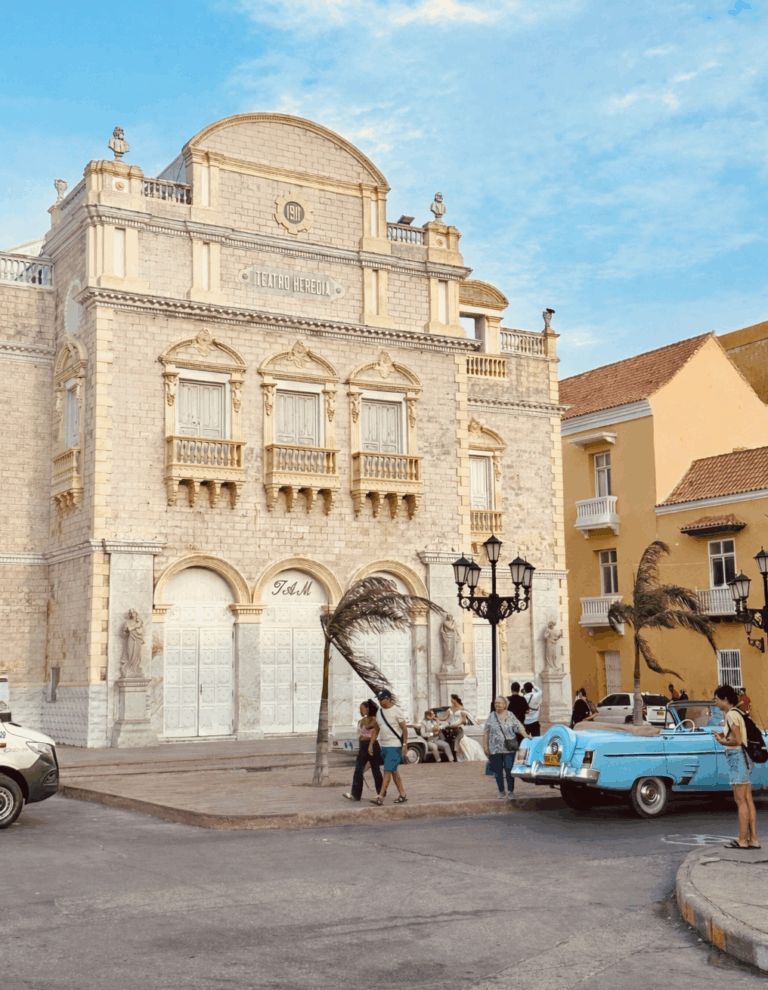
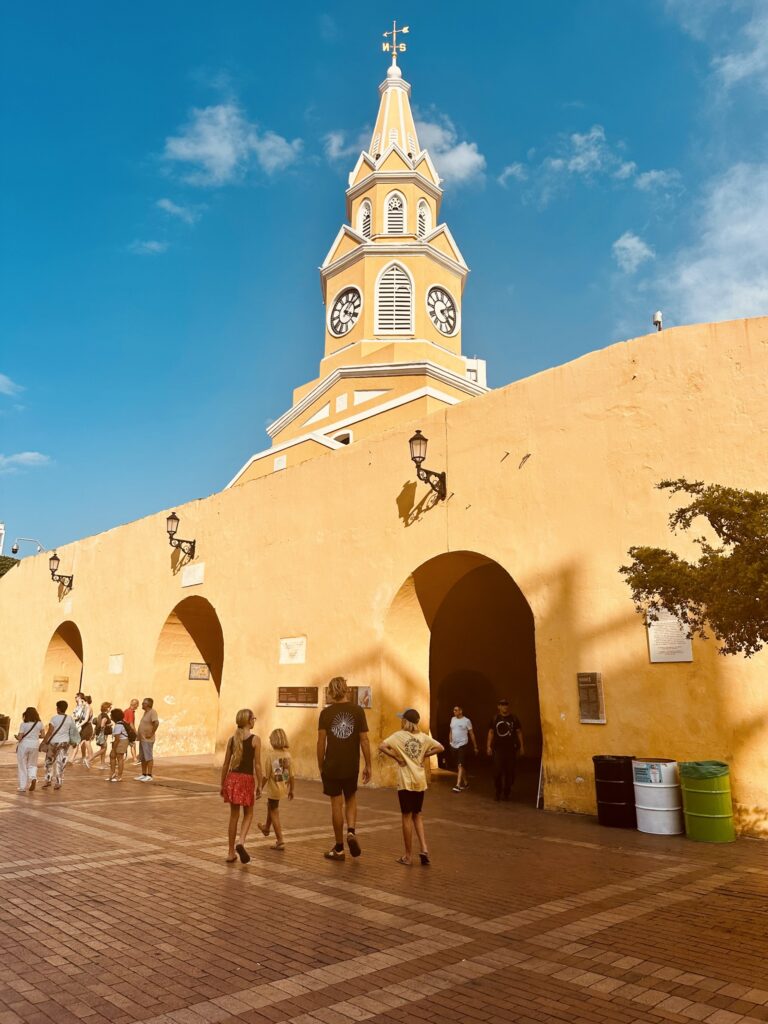
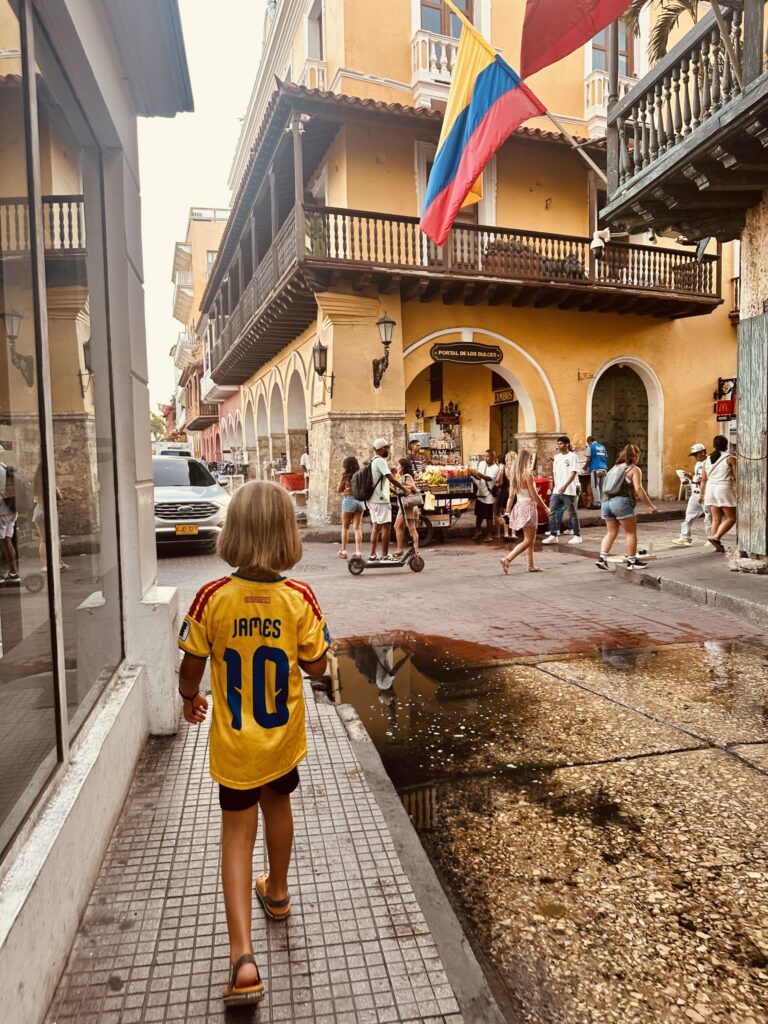
The historic centre of the city is a swirl of colour and history: pastel houses, flower-draped balconies, wooden doors painted in every shade imaginable. Founded in 1533, the city became one of the most important ports of the Spanish Empire, and the rich history is still visible everywhere you look, from the enormous fortress of Castillo San Felipe de Barajas to the maze of streets inside the walled city of Cartagena. Today, the old colonial architecture shares space with music, street food, and the constant hum of life that drifts through the plazas on the Caribbean breeze.
We had three days to explore the city with the kids, and quickly discovered the most important thing about Cartagena: it is hot. Not just warm – intense, steamy Caribbean heat that wraps around you the moment you step outside. The trick is simple: get out early, though this can be challenging with family travel. Exploring the streets or visiting the fort first thing in the morning makes everything more enjoyable. The air is cooler, the light is softer, and the crowds are still thin. After lunch, when the heat builds, it’s worth retreating indoors or slowing the pace until the city comes alive again later in the afternoon.
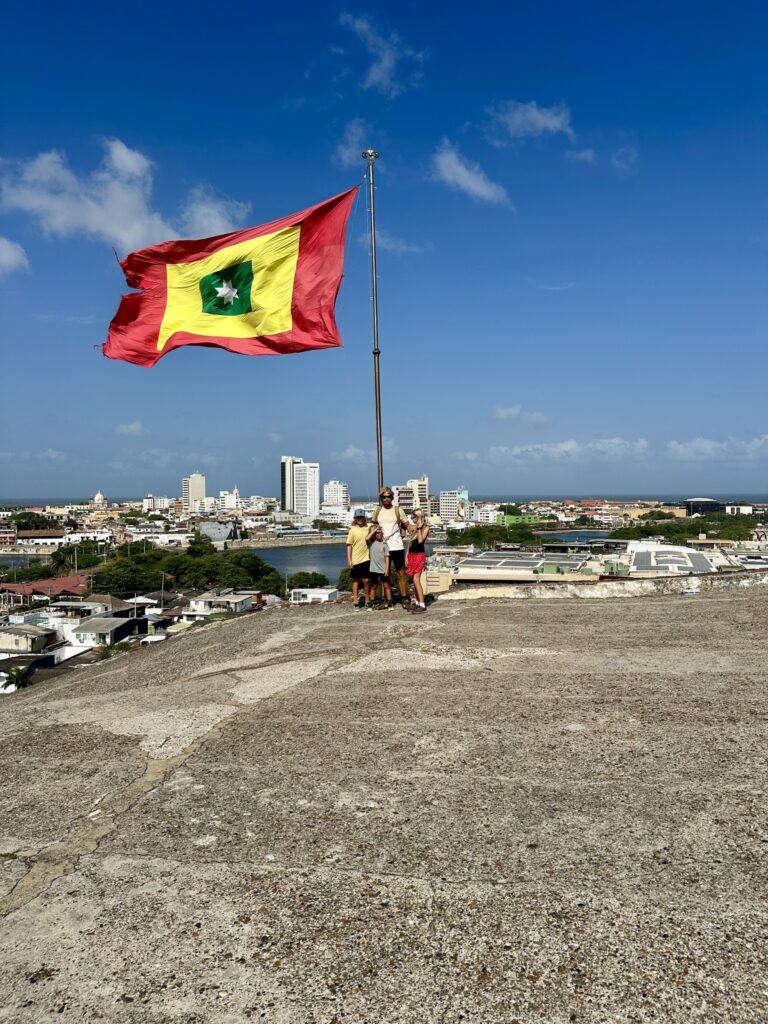
One of the highlights for our kids was visiting Castillo San Felipe de Barajas, which sits just outside the old town. From a distance, it looks imposing, but up close, it resembles a giant stone playground. The fortress is filled with tunnels, ramps, and narrow passages that wind through the walls. The children immediately turned it into an adventure, ducking through dark corridors and racing to the lookout points at the top where the entire city spreads out below.
Near sunset, we found one of Cartagena’s simplest pleasures: strolling along the sea walls. The ramparts of the Walls of Cartagena are wide and surprisingly relaxed – perfect for an evening stroll with children. As the sun begins to set, the air cools, and the breeze from the Caribbean picks up. From the top, you can see the ocean on one side and the colourful rooftops of the old city on the other. The kids ran along the sea walls, while we watched the sky turn orange over the water.
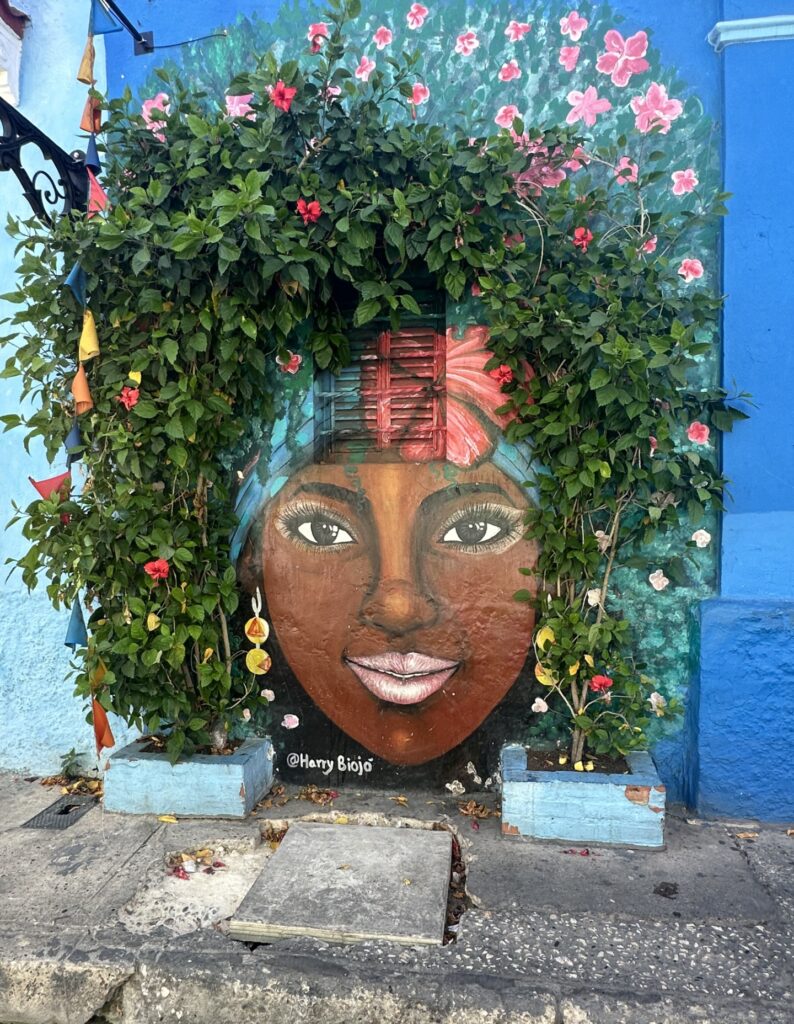
We caught an Uber from San Diego to Getsemani. Just outside the centro historico in Getsemaní, the atmosphere shifts slightly, a little grittier, a little louder, but also incredibly vibrant. During the daytime, it’s a great place to explore with the family. The streets are filled with colourful murals, street art, and flags strung between balconies, turning the neighbourhood into something of an open-air gallery. Children can find the huge painted animals and characters on the walls, while adults enjoy the cafés and relaxed local feel. The heart of the area is Plaza de la Trinidad, where families gather in the late afternoon for snacks, street food, and people-watching. In the evenings, it becomes busier and more nightlife-focused, so exploring earlier in the day tends to work best when visiting with children.
On your way to Getsemani, you’re likely to pass through the Parque del Centenario. It’s one of the best places to see monkeys in the city. Located between the walled old town and Getsemaní, the park is also home to several resident sloths, iguanas, and multiple birds. We saw a few monkeys on our way to Getsemanai and, from eavesdropping on the guides, we learned that many of the animals had been rescued from the illegal wildlife trade and placed in the park.
Like many places in Latin America, Cartagena rewards a little preparation. Carrying small pesos is essential for fresh fruit, arepas, empanadas, quick coffees (tintos), or the occasional souvenir. Street food is everywhere and often the easiest option when travelling with kids. We found ourselves constantly stopping for snacks: fried empanadas, sweet juices, and the unforgettable arepa de huevo, messy, delicious and very Cartagena.
You also quickly learn to be politely firm. Street rappers and performers move through the plazas offering quick performances, sometimes launching into a freestyle rap before you’ve had time to answer. If you’re not in the mood, a friendly but clear “no, gracias” works best. Tipping expectations vary widely. Some people give 5–10,000 pesos, others more if a group performs, but it’s entirely up to you.
Where you stay in Cartagena makes a big difference, too. Basing yourself within or near the walled city. We stayed in San Diego, which meant we could walk almost everywhere. It’s an ideal base for children, as you can escape back to your accommodation for breaks when the heat becomes too much. The neighbourhoods are lively but generally calmer than nearby Getsemaní at night, which tends to have more nightlife.
Safety-wise, Cartagena felt fine if you follow the usual city travel habits. Stick to the well-lit streets within the walled city, and take an official yellow taxi or Uber if you want to venture out of the centro historico. In many cases, it’s actually faster to walk through the old town than wait for a taxi to navigate the narrow streets.
We had considered visiting the beaches, but with limited time, we decided to focus more on the city itself. The city beaches, such as those in the glitzy high-rise area of Bocagrande, are convenient but not as beautiful, and the rough weather before arriving left choppy seas for days.
Instead, we focused on exploring the city itself. From what we’d researched, the best beaches lie out in the Islas del Rosario, about an hour away by boat. Many families head there for a day trip to swim in clearer water, snorkel, and eat fresh fish with coconut rice while the kids play in the sand. If your children enjoy boats, it sounds like a great way to balance the city experience with a beach day – just check the sea conditions before taking off.
In the evenings, Cartagena softens into something magical. The heat fades, musicians appear in the squares, and the plazas fill with families, vendors, and wandering performers. Horse-drawn carriages clatter over the cobblestones while people drift between ice-cream shops and street stalls. We often ended the day sitting in a plaza with a cold drink while the kids watched the street performers and musicians.
In Cartagena, the best moments aren’t always planned; they’re simply found by wandering the streets and letting the city unfold around you.