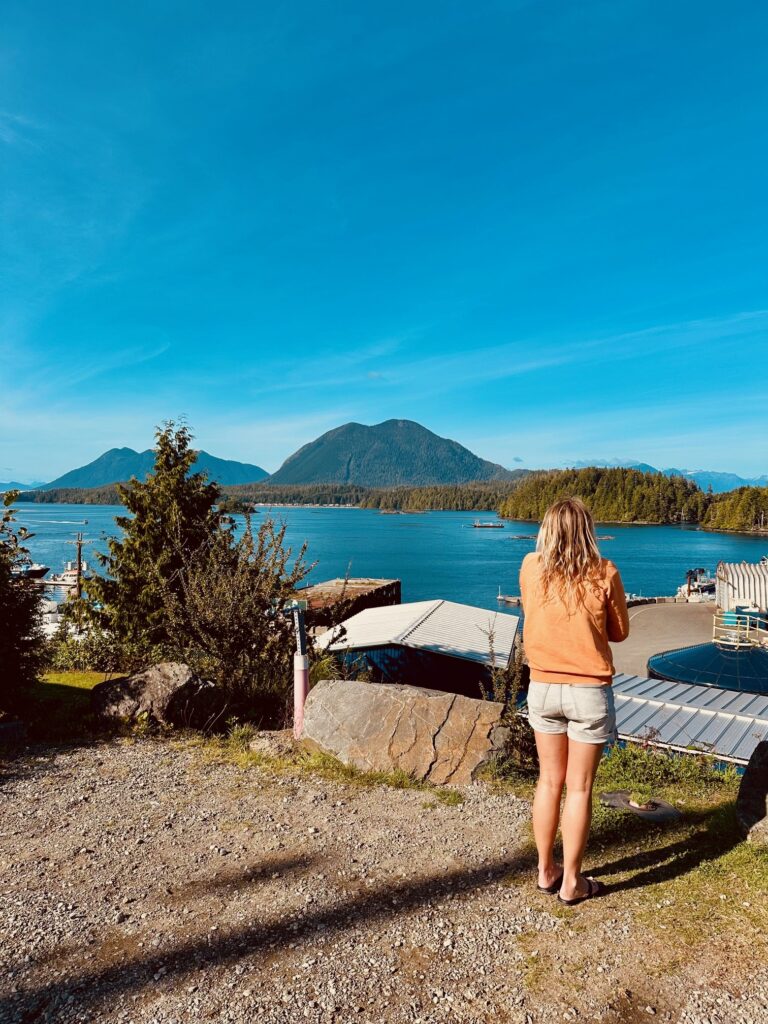
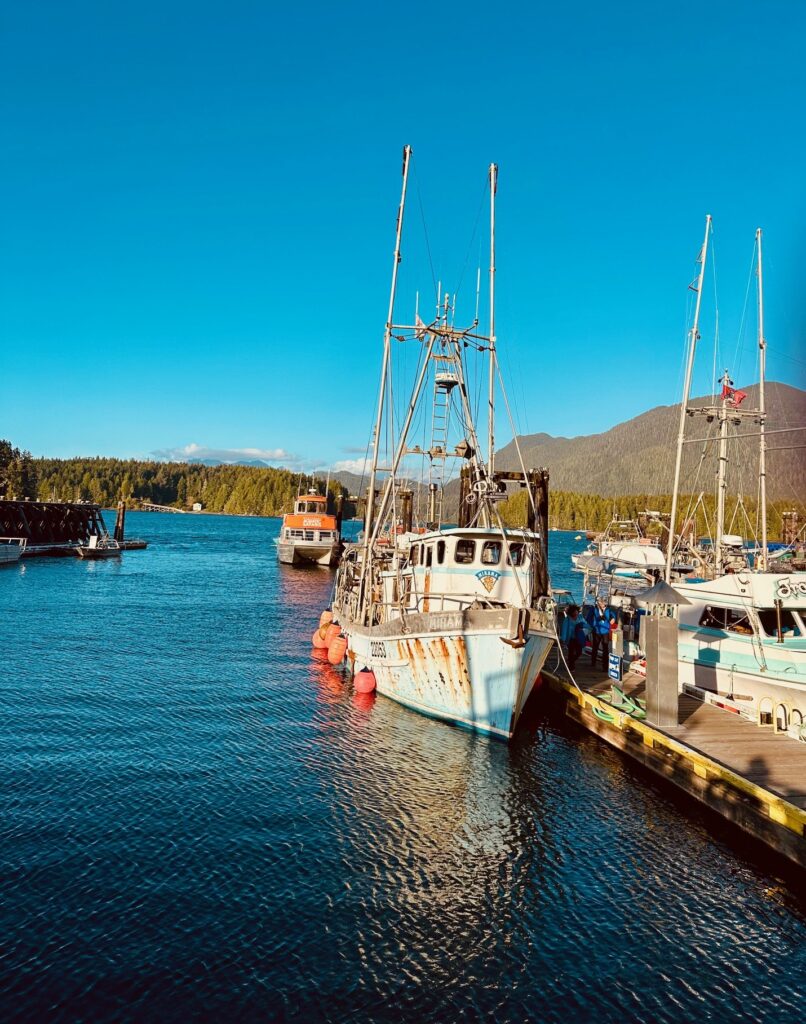
Nestled on the rugged west coast of Vancouver Island, Tofino is a small coastal town that has developed over time from a remote fishing and logging outpost into one of Canada’s most iconic surf and nature destinations. Surrounded by the Pacific Ocean and ancient temperate rainforest, it sits on the edge of Clayoquot Sound, an area recognised for its rich biodiversity and dramatic coastal landscapes. Today, Tofino still holds onto its small-town feel. Wooden buildings, independent cafés and local galleries line the main stretch, where life moves at an unhurried pace shaped as much by tides and weather as by time.
Despite its growing reputation, Tofino remains grounded in its surroundings. The ocean, forest and weather still dictate daily life, and even in the heart of Tofino town, nature is only a few steps away.
For thousands of years, this coastline has been home to the Tla-o-qui-aht First Nation, whose deep cultural and spiritual connection to the land and sea continues to shape the region. The town itself developed through fishing and forestry before gradually shifting towards tourism, as surfers and travellers began arriving in search of its waves, wilderness and storm-battered coastline.
A visit to the Tofino Community Hall Park offers a glimpse into everyday local life, an open green space where families gather, community events spill into the summer months, and visitors relax between beach walks and town explorations. Just nearby, the Tofino Skatepark represents the younger, surf-town energy, where skaters flow through a concrete bowl framed by forest and distant mountain views.
For a deeper sense of place, the Tofino Clayoquot Heritage Museum offers insight into the region’s layered history, from Indigenous heritage and early settler life to the rise of fishing, forestry and the modern surf culture that now defines the town’s identity.
Despite its growing reputation, Tofino remains grounded in its surroundings. The ocean, forest and weather still dictate daily life, and even in the heart of Tofino town, nature is only a few steps away.
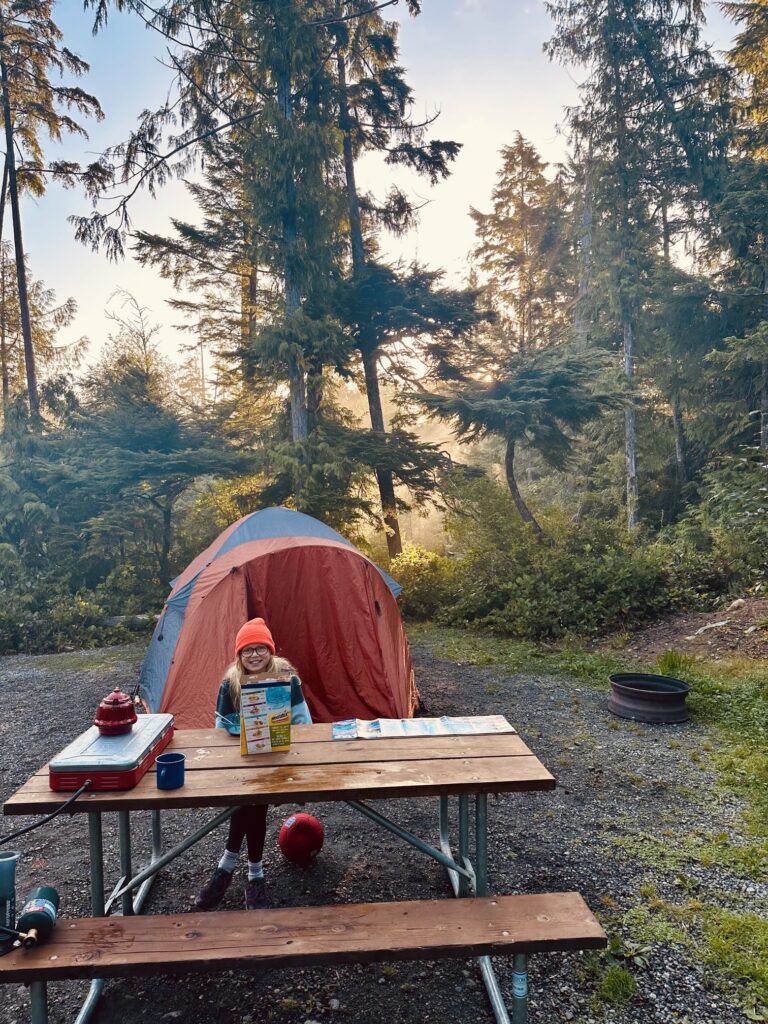
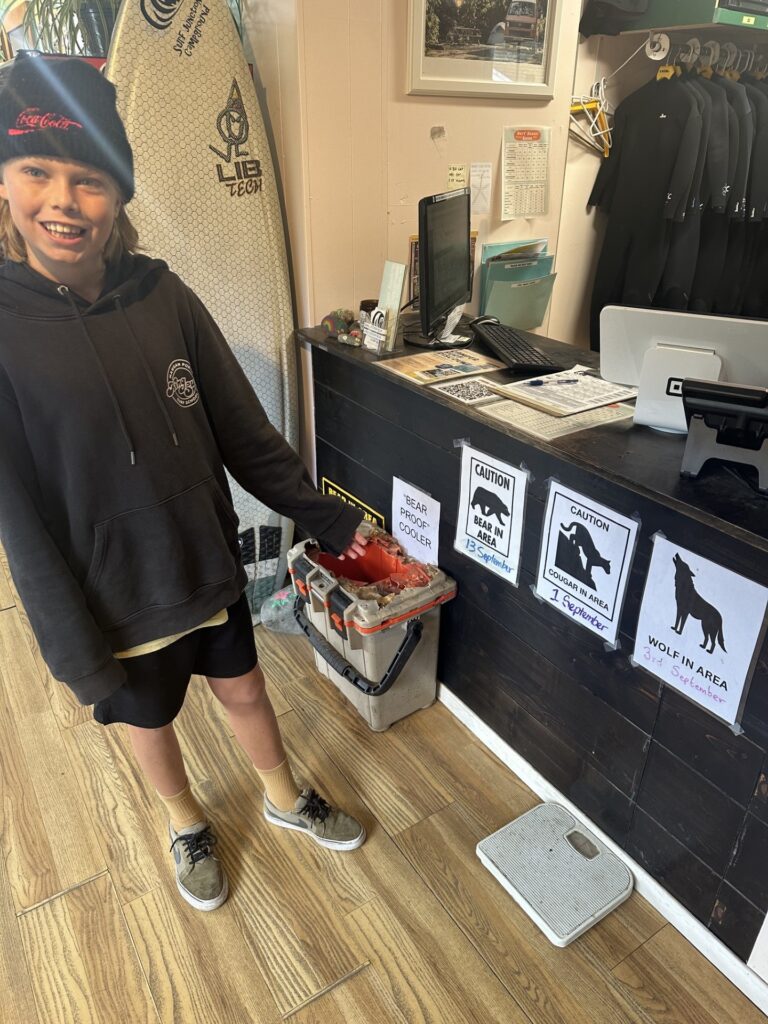
Tucked into the coastal rainforest near the edge of the Pacific Rim, the Surf Junction campground sits between Tofino and Ucluelet rather than directly on the beach, within easy reach of some of Canada’s most famous surf breaks and wild Pacific shoreline. We stayed in the quieter, spacious back lot, nestled between the trees, past the numerous signs for wolves, bears and cougars.
For many visitors, Surf Junction has become a gathering place woven into Tofino’s surf culture. People often arrive planning to stay a few nights and often find themselves extending their trip or returning regularly, drawn in by the wild landscape and the unhurried pace of life on Canada’s west coast.
Surfing is woven into Tofino’s identity and has helped transform the town from a remote coastal community into Canada’s unofficial surf capital. While Canada is not the first place many people picture when they think of surfing, the stretch of coastline around Tofino consistently produces rideable waves year-round thanks to frequent, large swells rolling in directly from the North Pacific.
What makes the area unique is its variety. Beaches around Tofino cater to complete beginners taking their first lesson through to experienced surfers chasing winter swells. Long Beach, with its vast open shoreline, is one of the region’s most recognisable surf spots and forms part of Pacific Rim National Park Reserve. Chesterman Beach is a favourite for its long peeling waves and broad sandy shoreline, while Cox Bay often attracts more experienced surfers when larger swells arrive.
Unlike tropical surf destinations, Tofino’s waves come with an entirely different atmosphere. Sessions happen beneath misty skies and alongside dense rainforest, with surfers pulling on thick wetsuits, boots and gloves before heading into the cold Pacific. Winter often delivers the biggest and most powerful swells, while summer tends to bring gentler conditions and a surge of first-time surfers. The contrast is part of the appeal; paddling out through cold water with snow-capped mountains in the distance feels worlds away from palm trees and turquoise bays.
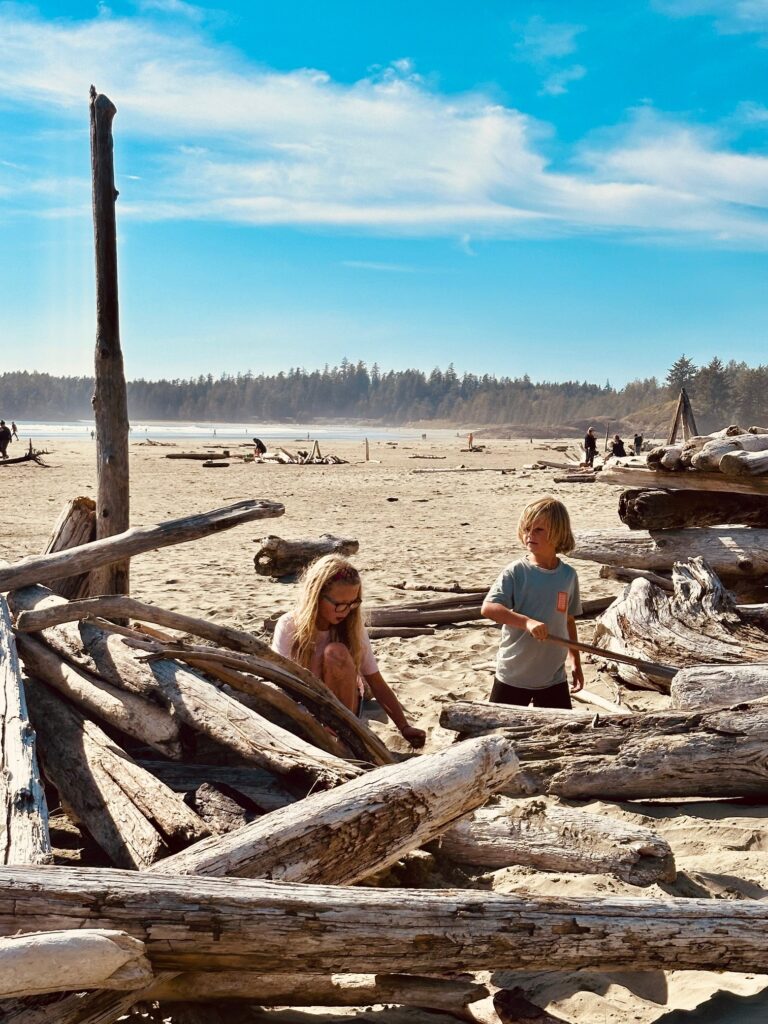
We were fortunate with a run of warm, sunny days that seemed to stretch on endlessly. Our days quickly fell into a regular pattern of beach time, building driftwood shelters, sea dips and family surfs. Although the Pacific still carried its September chill, the warmer air made it easy for everyone to get in the water and catch a few waves. One of the only grey, rainy days of our trip ended up while I was surfing early one morning. I was at Long Beach when an inquisitive large sea lion appeared, surfacing a little too close for comfort. Fascinating at first, it quickly became slightly unnerving as it kept reappearing nearby.
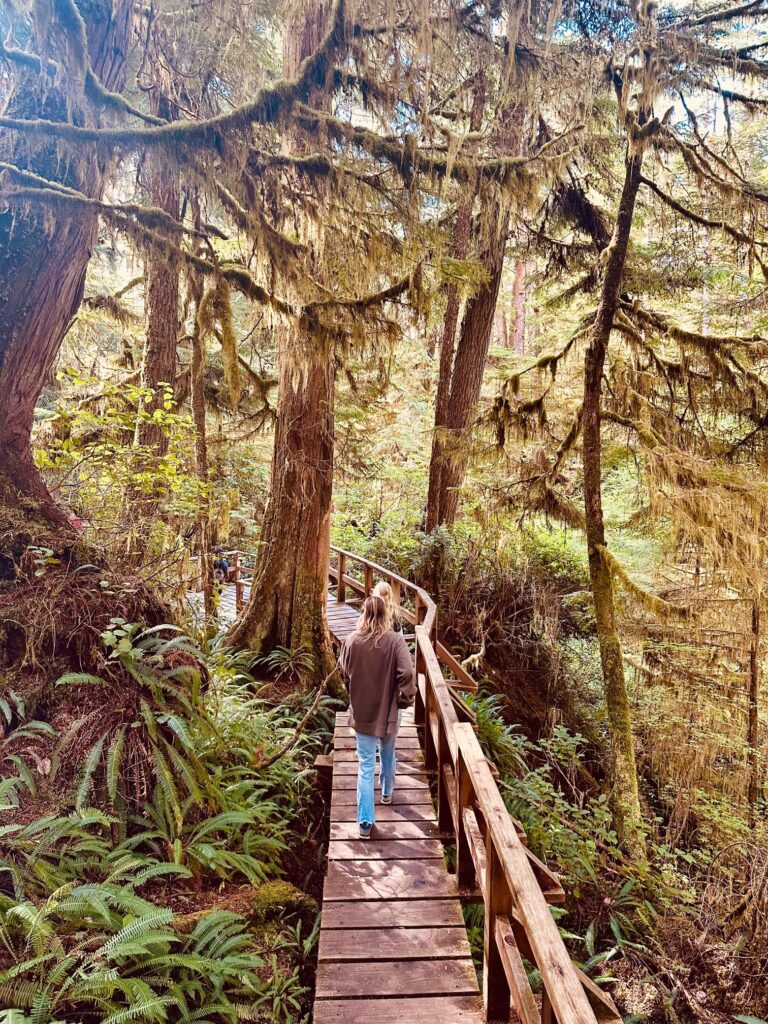
Beyond the beaches and surf culture, some of our favourite moments around Tofino happened beneath the rainforest canopy. The trails here feel like an experience in themselves, winding through dense old-growth forest where towering cedar and spruce trees block out much of the light and everything is covered in thick layers of moss and ferns.
The Rainforest Trail is one of the most accessible and, hence, most popular circular walks near Tofino. Wooden boardwalks and stairways weave through giant trees and deep green forest, giving you a chance to slow down and take in the scale of it all. Within minutes, the sounds of the road disappear, and you’re left with little more than birdsong and the quiet stillness of the forest. The trail consists of two short loops but somehow feels much bigger than it is.
A favourite walk of ours was Combers Beach Trail, a shorter walk that perfectly captures the contrast that makes this coastline so special. The trail drops through the forest on boardwalks and stairs before suddenly opening out onto a huge stretch of beach scattered with enormous driftwood logs. One moment you’re surrounded by towering trees and cool rainforest air; the next you’re standing on an open shoreline that feels wild, quiet and almost endless.
It felt like an entirely different side to Tofino. The beaches may be what first draw people here, but the forests are what make the landscape feel unforgettable.
One of the most memorable experiences of our time in Tofino was a boat-based bear-watching trip with Westcoast Aquatic Safaris, along the calm inlets and shoreline of Clayoquot Sound. Setting out from the harbour, the town quickly fades into open water and dense coastal rainforest, where the tide gently reveals stretches of intertidal shoreline that feel completely untouched. In the quieter coves and estuaries, it’s often possible to spot black bears foraging along the edge of the forest at low tide, moving slowly through the shallows in search of crabs and shellfish. Watching them from the water felt both surreal and respectful, a quiet reminder of how close wilderness sits to everyday life here, and how easily nature reclaims the space just beyond the town’s edge.
A few things to keep in mind when planning a trip to Tofino: it’s every bit as magical as it looks, but it comes with a few realities that are worth considering.
Firstly, it gets busy. Despite its remote feel, Tofino is no longer a hidden secret; it’s very popular, especially in peak summer months. It’s become a favourite for islanders escaping the city of Victoria for long weekends, and many tourists from overseas are drawn to its natural beauty. The town has a small footprint, and accommodation, surf spots and even cafés can get crowded quickly when the swell is good and the weather is on your side.
Second, it’s expensive. Everything from food to parking to beach and town access comes at a premium, particularly around Pacific Rim National Park Reserve. Even simple things like day parking or grabbing lunch in town can add up faster than expected, so it’s worth budgeting more than you think you’ll need.
And then there’s the weather. Tofino has a reputation for rain, and to be fair, it absolutely can rain… a lot. Storm-watching season is part of its identity, and the rainforest only exists because of that constant moisture. That said, it doesn’t always play by the rules. I’ve been three or four times now and somehow managed to get mostly sunshine each time, which apparently is not the standard experience!
Whatever weather you do get, Tofino has a way of staying with you long after you’ve left its wild shores. It’s not just the surf rolling in from the Pacific or the endless stretches of sand, but the feeling of being held between two contrasting worlds: dense, ancient forest on one side and wild ocean on the other. It’s a place that allows you to take time and slow down, where family moments feel bigger and more special than ever. Yes, it can be busy, expensive, and the weather is unpredictable, but that’s part of its character.
Tofino doesn’t promise perfection; it offers a raw, grounding kind of beauty that reminds you of the value and beauty of immersing yourself in the wilderness.