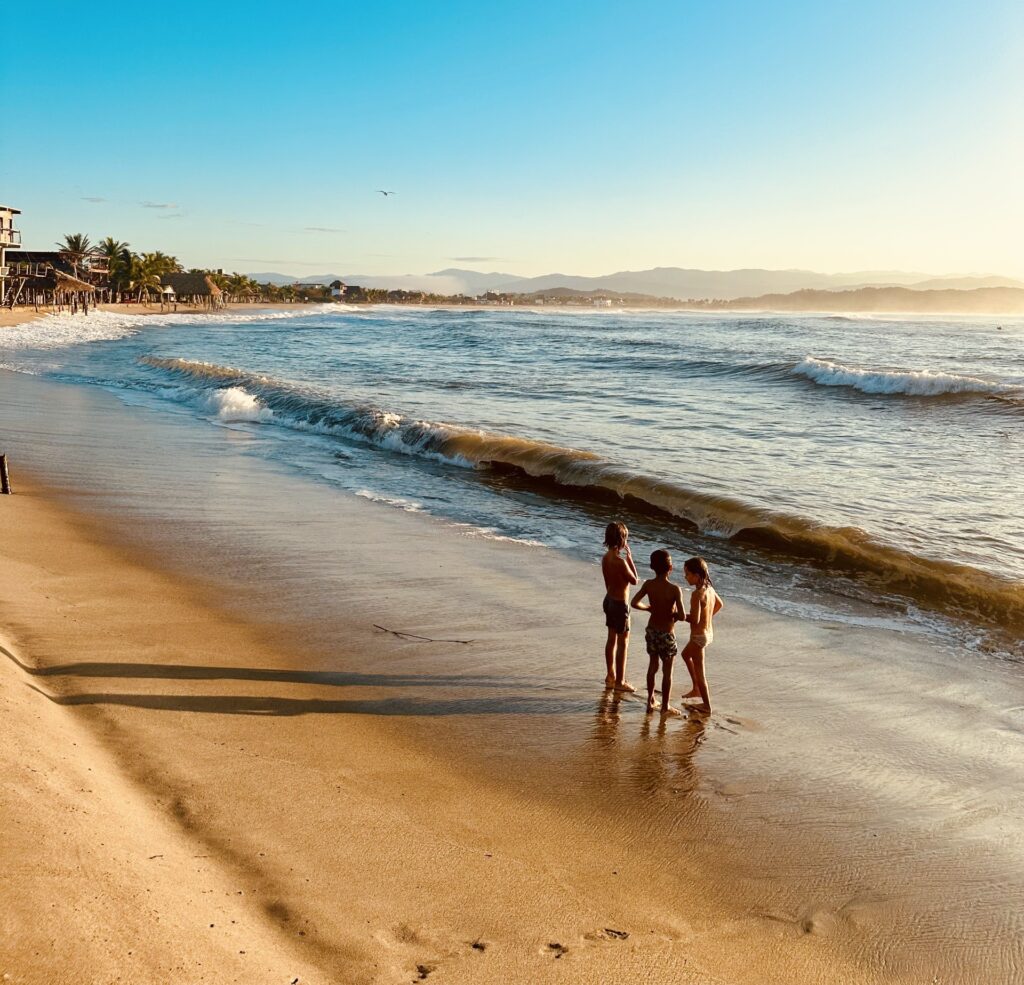
Some places feel like they sit just outside the rush of the modern world—and Laguna de Chacahua is absolutely one of them. Tucked along Oaxaca’s stunning Pacific coastline, this peaceful pocket of mangroves, glassy water, and slow, easy village life is the perfect antidote to the buzzing, surfy crowds farther south. Chacahua has held onto its traditional fishing-village soul, making it the ideal getaway for travellers craving a quieter, more authentic escape from the ever-growing bustle around Puerto Escondido.
Getting to Chacahua is an adventure in itself.
We started our journey from La Punta, catching a taxi to the Terminal Tur station before hopping into a collectivo bound for El Zapotalito. If you’re travelling with surfboards, be prepared: collectivos typically check and charge per board, and yes… we paid for each one! It costs approx 60 MXN per person plus extra for boards. The drive along the coastal highway rolls by in about an hour before you reach the turnoff for the lagoon.
At the intersection, you’ll find a nearby camioneta (20 MXN per person) – small open-bed trucks that manage to fit children, backpacks, surfboards, and the odd chicken without complaint. A breezy ten-minute ride later, you’re at the water’s edge.
While some travellers opt for the longer collectivo and shorter bus ride, we decided to take the longer boat ride, direct from Zapotalito. Yes, it cost a bit more (around 2500 MXN, roughly $100), and maybe we could have haggled or waited for other people to join us, but it was a fun, memorable experience: wind in our hair, mangroves towering overhead, and that exhilarating feeling of gliding deeper into the wild heart of Chacahua. It wasn’t just transportation… it was the moment the trip truly began.
The boat ride into Chacahua is nothing short of an adventure. You glide through narrow mangrove tunnels, duck beneath low branches, and watch the world open up into a bright, calm estuary that feels like a secret entrance to paradise.
Along the shoreline, a scatter of simple cabanas and hammocks stretches along the sand, shoulder-to-shoulder with a few slightly fancier stays tucked toward the far end of the beach. The atmosphere is unpolished in the best way—driftwood signs, sandy paths, and that sense of being pleasantly removed from everything.
We chose a small cabin at Cabañas La Isla Chacahua on the northern side, nestled beside the local community and closer to the surf breaks and the cluster of beachside restaurants. The cabin overlooked a calm, glassy lagoon framed by mangroves, giving us quiet mornings and sparing us from the late-night weekend music that tends to drift across the beachfront. There are just two rooms available; we had the downstairs one, sharing two double beds between the five of us, with the added convenience of a private bathroom, A/C, intermittent Wifi and a small fridge to keep food and drinks cold.
A family we got to know were staying at the beachside Cabañas El Cova, only a few metres away, with a front-row view directly onto the shoreline—waves practically at their doorstep. They also had the bonus of the use of a kitchen next door. We couldn’t find this place online, though they do keep a Facebook page, and after seeing their setup, we’d be tempted to stay there if we return to Chacahua.
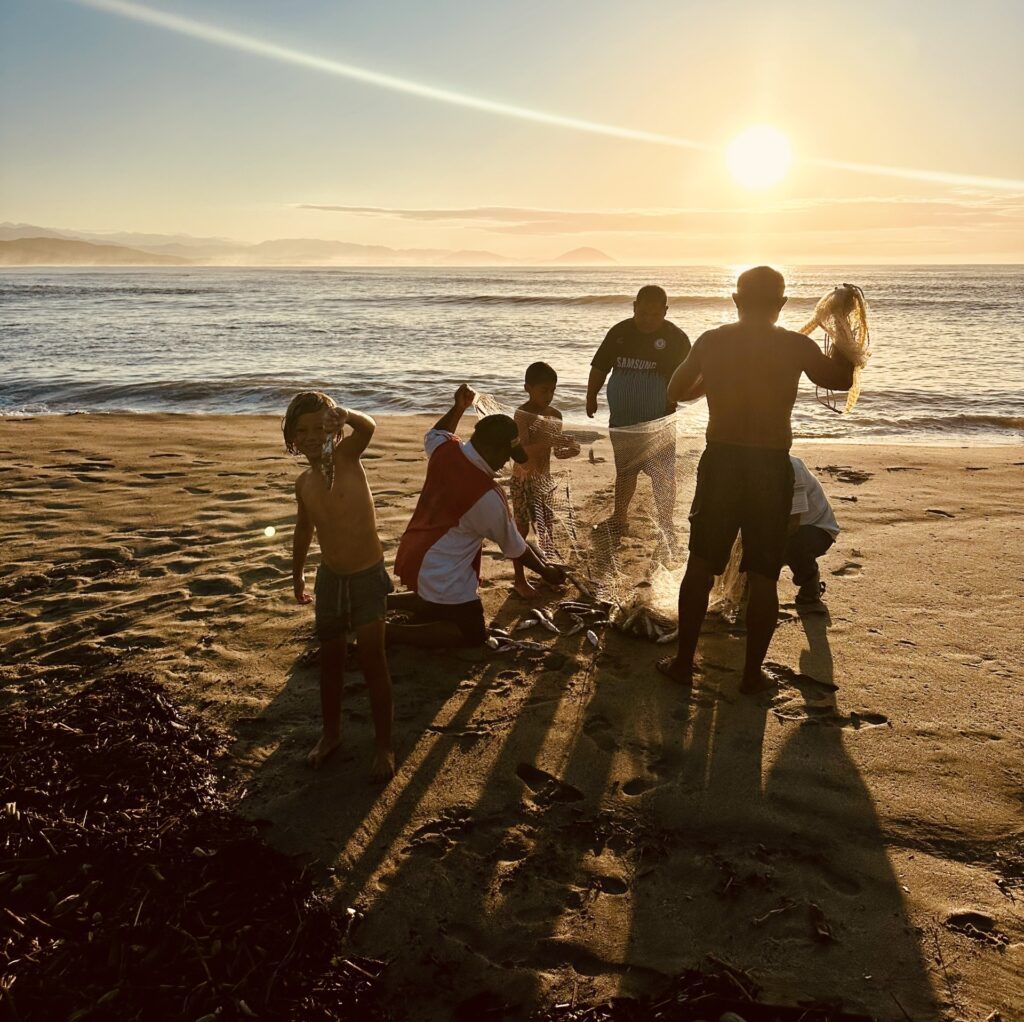
Chacahua is the kind of place that instantly resets your internal rhythm. Mornings start with fishermen pulling in their nets. Afternoons melt into hours of swimming, wandering along the beach or next to the calm lagoon. Being an early riser and with no kitchen to make Coffee, I would walk to the beachside restaurant after sunrise, and the family would kindly make me a morning coffee!
For families, Chacahua is pure magic. Our kids adored it. They helped fishermen drag in morning catches, surfed the gentle waves without crowds and raced along the shorebreak, spotting pelicans diving for their meals. Our youngest became ‘best friends’ with a Mexican boy, also visiting Chacahua. They spent countless hours gathering fish on the shoreline, then preparing and cooking them. Most evenings, local kids were out enjoying the waves too, giving the place an easy, communal feel. Evenings became mini-adventures – strolling to the little “square,” home to a handful of comedores and pulperías.
The real magic of Laguna de Chacahua isn’t just the scenery – it’s the feeling it gives you. A sense of being deeply connected to nature, to the community, and to a slower, softer way of life. No giant resorts. No crowds. No rush. Just the steady rhythm of the tide and the gentle hum of village life.
If you’re craving a place to unplug, slow down, and breathe in the wild beauty of Oaxaca, Laguna de Chacahua is the escape you didn’t know you needed – but won’t soon forget.
I’d read glowing reports of long, easy righthanders here – exactly the kind of waves my wife and kids were craving after the thumping surf at Zicatela and the crowded lineups at La Punta. But recent storms seem to have shifted the sand and altered wave quality, and created the odd rip current here and there. While the surf was definitely more user-friendly for everyone, it wasn’t quite the dreamy setup I’d been hoping for. Still, if you’re looking for a softer wave in the Puerto area, it’s absolutely worth a visit – it just isn’t firing on all cylinders at the moment.
I did, however, stumble upon another incredible wave in Chacahua – one that totally made up for the softer surf out front. It takes a paddle across the estuary and a short ten-minute walk, but trust me, it’s so worth the mission. Just a heads-up: it’s a heavy, Puerto-style wave… only without the crowds!
There are no ATMs, so bring cash with you. After not budgeting for our expensive boat ride, I soon realised we were low on cash. Luckily, the main shop near the square will do cash back for a small card fee if you find yourself in a similar situation!
Here’s a smoother, more descriptive rewrite of your text, keeping all the key information:
There are several places to eat in Chacahua. Along the beach, restaurants like Restaurante Calamar focus mainly on fresh seafood, perfect for a meal with your toes in the sand. Around the central square, you’ll find a bit more variety. Restaurant Berlitha serves a mix of tacos, tlayudas, and burgers at reasonable prices. Nani Restaurant always drew a steady crowd – though we were usually too hungry to wait for it to open. Chacahua Wings is another solid option in the square, and conveniently, they accept card payments – handy when your cash starts to run low.
The bioluminescent tours take you on a boat trip across the lagoon, where glowing plankton light up the water in shimmering blue-green when touched. After sunset, guides navigate through the quiet waterways of Lagunas de Chacahua National Park until full darkness reveals the spectacle. You can dip your hand, or even swim, to see trails of light follow your movements, often paired with a bit of local nature insight and peaceful stargazing before heading back to shore.
We had planned to catch the collectivo from the square, but a local offered to take us in a slightly smaller boat for about half the price of our outbound ride. At El Zapotalito, taxis are waiting to carry travellers toward Puerto Escondido, but we decided to take the camioneta back to the intersection. As it turned out, the driver offered to take us all the way to La Punta for a very reasonable price, and we gladly accepted.